


Table of Contents
- Why Dry and Tired Skin Needs Deep Hydration
- Signs of Dehydrated Skin vs Dry Skin: How to Tell the Difference
- Natural Humectants for Skin Hydration That Actually Work
- Building a Clean Beauty Routine for Tired Skin
- Choosing Products for Deep Hydration: What to Look For
- Common Mistakes That Sabotage Deep Hydration
- Frequently Asked Questions
Last Updated: September 12, 2026
Why Dry and Tired Skin Needs Deep Hydration
Deep hydration is the process of restoring water content to the skin's outermost layers so it looks plump, comfortable, and resilient again.
How Modern Life Drains Your Skin
Central heating, air conditioning, long days in front of a screen, and short nights all pull moisture from the skin (the NHS). Add alcohol-based toners or harsh foaming cleansers and the outer layer struggles to hold water at all. The result is the specific tired look that sends people searching for deep hydration for dry and tired skin for clean skincare e-commerce: not flaking and rough, but tight, dull, and lined.
The Barrier Connection
The skin barrier is the thin outer layer that traps water in and keeps irritants out. When it is compromised, water escapes faster than it can be replaced. This is why a rich moisturiser alone often fails. You are sealing a leaky roof. Rebuilding the barrier with ceramides, fatty acids, and humectants is what makes hydration last beyond the first hour.
Signs of Dehydrated Skin vs Dry Skin: How to Tell the Difference
Dehydrated skin lacks water; dry skin lacks oil. That single distinction decides which products will actually help you. Dehydrated skin often looks shiny yet feels tight, shows fine lines that vanish after moisturising, and reacts to products that never bothered you before. Dry skin, by contrast, is a skin type: it feels rough, may flake, and produces little natural oil across the whole face.
The two can overlap, and many people have both at once. A useful test is timing. If your skin feels tight an hour after cleansing but comfortable after a hydrating serum, dehydration is the driver. If it still feels dry and rough after layering moisture, your barrier and oil levels need attention too.
Natural Humectants for Skin Hydration That Actually Work
Natural humectants are ingredients that draw water into the skin from the air and the deeper layers beneath it. They are the workhorses of any deep hydration routine because they add water rather than simply sealing it in.
Hyaluronic Acid and Glycerin
Hyaluronic acid holds many times its own weight in water, which is why it plumps fine lines so quickly. Glycerin, cheaper and just as effective, sits near the top of most well-formulated hydrating products. Applied to slightly damp skin, both work harder. The catch: in very dry air they can pull moisture from your skin instead, so always follow with a cream to lock the water in.
Plant-Based Alternatives
Aloe vera, beta-glucan from oats, and panthenol are gentler options for reactive skin. Ceramide-rich plant oils such as rosehip and avocado support the barrier while humectants do the watering. This pairing of water-drawing and barrier-repairing ingredients is where clean formulations can make a noticeable difference.
Building a Clean Beauty Routine for Tired Skin
A clean beauty routine for tired skin follows one rule: layer water first, seal it second, and protect it last. The order matters more than the number of products.
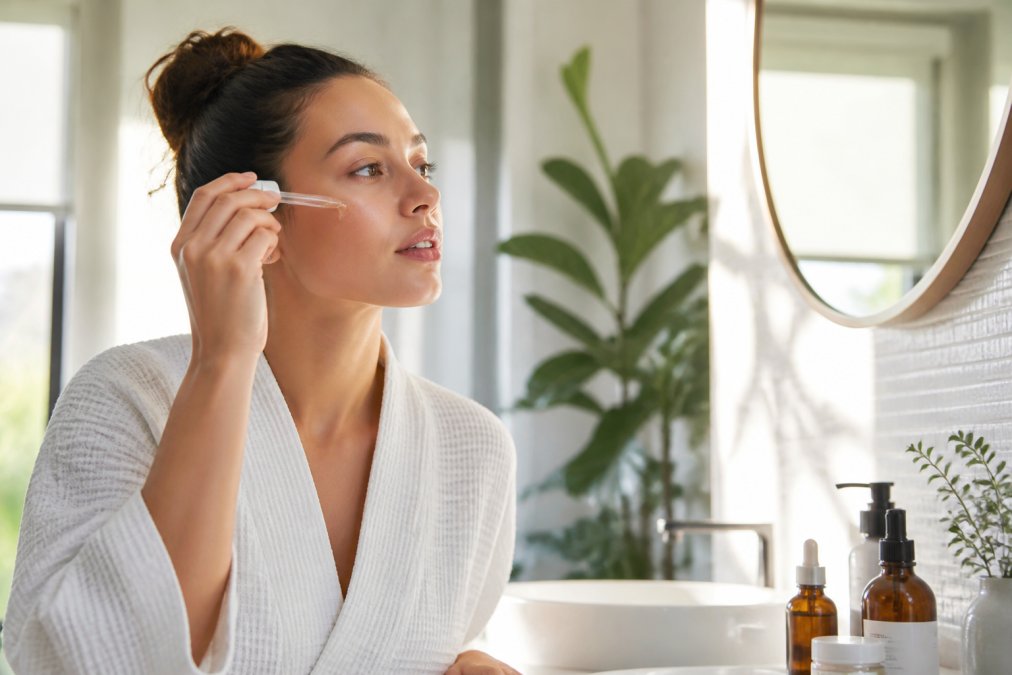
Morning Routine
- Cleanse gently with a balm or cream cleanser, not a foaming wash
- Mist or pat on a humectant serum while skin is damp
- Apply a ceramide or plant-oil moisturiser to seal it in
- Finish with SPF, which protects the barrier from UV damage all day
Evening Routine
Evening is when repair happens, so this is the time to add actives. A hydrating mask two or three times a week, such as a hyaluronic acid and gluconolactone treatment, smooths texture while it plumps. Follow with a calming cream and, if your skin tolerates it, a gentle retinol alternative on alternate nights.
| Step | Morning | Evening |
|---|---|---|
| Cleanse | Cream or balm cleanser | Double cleanse if wearing SPF |
| Hydrate | Humectant serum on damp skin | Hydrating mask 2-3x weekly |
| Seal | Ceramide moisturiser | Calming cream with plant oils |
| Protect | SPF every day | Barrier repair overnight |
Choosing Products for Deep Hydration: What to Look For
Look for short ingredient lists built around proven humectants and barrier lipids, not long lists of botanical extracts at trace levels. Scan for hyaluronic acid, glycerin, panthenol, ceramides, and cold-pressed plant oils near the top of the list. Be sceptical of "hydrating" claims backed only by fragrance or silicone, which smooth the surface without adding water.
Fragrance is the most common trigger for reactive skin, so choose unscented or naturally scented formulas if your skin flares easily (the NHS). A well-built routine might include a cleansing balm, a ceramide booster, a hydrating gel, and a weekly mask. For those who want the guesswork removed, the Nourishing Rescue Skincare Bundle gathers a cleansing balm, olive and avocado serum, and calming cream into one routine. Simpler still, the Organic Hydration Gel delivers instant, soothing moisture for thirsty skin, while the Apis Ceramide Power Glow Booster rebuilds the barrier with liposomal ceramides and hyaluronic acid.


Common Mistakes That Sabotage Deep Hydration
The biggest mistake is over-cleansing. Stripping the barrier with hot water and foaming washes undoes every hydrating product that follows (the NHS). A common error is applying serum to completely dry skin, where humectants pull moisture from the skin rather than the air. Another is skipping moisturiser because a serum "feels hydrating enough" in the moment; without a seal, that water evaporates within the hour.
Layering too many actives at once is a quieter saboteur. Acids, retinoids, and vitamin C used together overwhelm a compromised barrier and leave skin more dehydrated than before. Introduce one active at a time, and pause it if skin stings. Finally, do not underestimate environment: a humidifier in a heated bedroom can do more for morning skin than any single product.
Dry, tired skin rarely needs more products; it needs the right ones, layered in the right order. If working out which humectants and barrier ingredients suit your skin feels like a research project, Luxe Beauty Hub exists to remove that friction. Our curated range brings together award-winning, high-quality natural formulas, including the Award-Winning Jasmine & Chamomile Rebalancing Oil and products As Reviewed by Caroline Hirons, all chosen to deliver deep hydration without irritation. Get started with Luxe Beauty Hub and build a clean routine that leaves your skin comfortable, plump, and genuinely rested.
Frequently Asked Questions
What are the best clean ingredients for deep skin hydration?
Look for natural humectants like hyaluronic acid, glycerin, and aloe vera, which draw water into the skin. Ceramides and plant oils such as olive and avocado help seal in moisture. For deep hydration, choose products that combine humectants with emollients and occlusives, like the Apis Ceramide Power booster or the Hyaluronic Acid 1% & Gluconolactone Mask.
How can I tell if my skin is dry or just dehydrated?
Dry skin lacks oil and feels rough, flaky, or tight all day. Dehydrated skin lacks water and may feel tight but can also be oily or combination. A simple test: pinch your cheek gently. If it wrinkles easily and doesn't bounce back, it's likely dehydrated. Both conditions benefit from deep hydration, but dehydrated skin needs water-binding ingredients, while dry skin needs oil-based moisturisers.
How do I build a clean skincare routine for tired skin?
Start with a gentle cleanser, then apply a hydrating serum or booster, followed by a moisturiser to lock in moisture. In the morning, add SPF. In the evening, double cleanse if you wear makeup, then use a hydrating mask once or twice a week. Look for clean products free from harsh sulphates and synthetic fragrances, such as the Nourishing Rescue Skincare Bundle.
Are natural oils effective for deep hydration?
Yes, natural oils like olive, avocado, and rosehip are rich in fatty acids that reinforce the skin barrier and prevent water loss. They are especially helpful for dry skin but less so for dehydrated skin, which needs water-binding humectants first. For best results, apply oils after a hydrating serum to seal in moisture. The Olive & Avocado Serum in the Nourishing Rescue Bundle combines both benefits.


