


Table of Contents
- Why Ingredient Labels Matter More Than Marketing Claims
- How to Read INCI Lists Without a Chemistry Degree
- Common Toxic Ingredients in Skincare to Avoid
- Skincare Ingredient Checker Tools That Do the Work for You
- Clean Beauty Alternatives for Anti-Ageing That Actually Perform
- Red Flags on a Label: When to Put a Product Back on the Shelf
- Frequently Asked Questions
Last Updated: 15 September 2026
Why Ingredient Labels Matter More Than Marketing Claims
Learning how to identify toxic ingredients in skincare starts with one uncomfortable truth: the words on the front of the bottle are marketing, and the words on the back are chemistry. "Clean," "natural" and "botanical" carry no legal definition in the UK, so they can appear on almost anything. The ingredient list, by contrast, follows a fixed international naming system you can actually check. At Luxe Beauty Hub, we read labels for a living, and the pattern is always the same: the products that shout loudest on the front tend to say the least on the back.
This guide shows you how to read an INCI list, spot the ingredients worth avoiding, and use checker tools when you want a second opinion.
How to Read INCI Lists Without a Chemistry Degree
Reading an INCI list is straightforward once you know two rules: ingredients are named in Latin or standardised chemical terms, and they are listed in descending order of concentration. Everything above the preservative line is present in meaningful amounts.
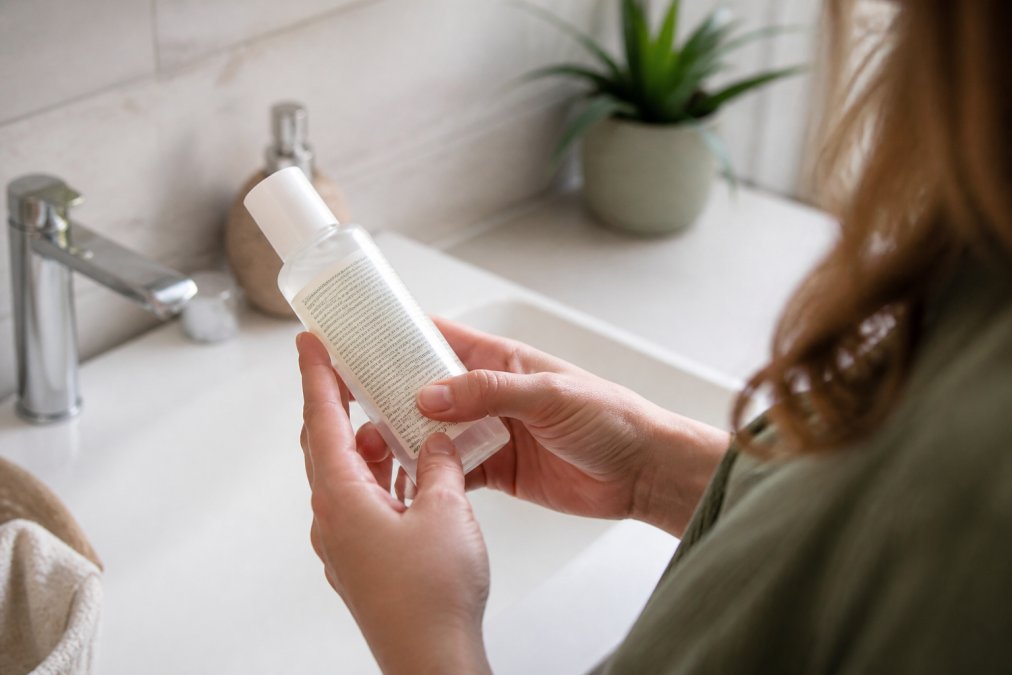
What the First Five Ingredients Tell You
The first five ingredients are the product. If water (Aqua) leads, you are buying a water-based formula, which is normal for cleansers and toners. What matters is what follows. A serum that lists Glycerin, Niacinamide or Squalane near the top is doing real work; one that lists fragrance second is mostly scent.
Decoding Latin Names and Concentration Order
Anything below 1% can be listed in any order the manufacturer chooses, which is why plant extracts often cluster at the bottom. This is the trick most guides miss: a "hero" botanical can appear on the label while making up a fraction of a percent of the formula. Two rules keep you honest:
- Above the preservative line: treat these as active concentrations and judge the formula on them.
- Below it: assume trace amounts unless the brand states a percentage.
- Watch for: key actives listed after Phenoxyethanol, a common marker for the 1% threshold.
Common Toxic Ingredients in Skincare to Avoid
The ingredients worth avoiding fall into four groups: preservatives linked to hormone concerns, harsh surfactants, fragrance allergens, and certain UV filters. None of this is about panic. It is about knowing which ones trigger reactions for you and which have a genuine question mark over them.
Parabens, Sulphates and Phthalates: What the Evidence Says
Parabens (Methylparaben, Propylparaben) are preservatives that some research links to hormone disruption, though regulators still permit them at restricted levels. Sulphates such as Sodium Lauryl Sulphate strip oil aggressively, which is why they leave skin tight and reactive. Phthalates rarely appear on labels at all; they hide inside the word "Fragrance."
Fragrance and Essential Oils: The Hidden Irritants
"Parfum" or "Fragrance" can represent dozens of undisclosed compounds and is one of the most common causes of contact dermatitis. Essential oils are not automatically safer: Limonene, Linalool and Citronellol are natural, and all three are recognised fragrance allergens that must be declared above set concentrations. If your skin stings after a "gentle" botanical serum, this is usually why.
Skincare Ingredient Checker Tools That Do the Work for You
Skincare ingredient checker tools scan an INCI list and flag ingredients against published safety and allergen databases. They are useful for speed, not for verdicts. Two limitations matter: most tools score ingredients in isolation rather than assessing the whole formula, and several are funded by brands with a commercial interest in the result.
Use them to shortlist, then verify. For a second opinion, the CosIng ingredient database from the European Commission lists official functions and restrictions for cosmetic ingredients, and the UK Food Standards Agency guidance on cosmetic claims explains what "natural" and "clean" are legally allowed to mean. Neither will tell you what suits your skin. That still comes down to the label and your own reaction.
Clean Beauty Alternatives for Anti-Ageing That Actually Perform
Clean beauty alternatives for anti-ageing work when they rely on proven actives rather than marketing botanicals. The ingredients with real evidence behind them, such as vitamin C, niacinamide, retinoids and gentle AHAs, are not inherently "natural."
A practical swap list:
| Instead of | Try | Why |
|---|---|---|
| Sulphate cleansers | Coconut-derived surfactants | Cleans without stripping |
| Synthetic fragrance | Unfragranced formulas | Removes the top irritant |
| Harsh alcohol toners | Glycerin-based hydrators | Supports the skin barrier |
| Undisclosed "parfum" | Single essential oils you know | You can track reactions |
For sensitive or reactive skin, an unfragranced balm removes the fragrance variable entirely while still delivering barrier-supporting oils. The NHS guidance on treating contact dermatitis is clear that identifying and removing the irritant is the first step, not adding more products.

Red Flags on a Label: When to Put a Product Back on the Shelf
Put the product back when the label fights you. These are the signals worth acting on:
- "Parfum" high in the list on a product marketed for sensitive skin
- No full INCI list anywhere on the packaging or website
- "Chemical-free" on a water-based product (water is a chemical)
- A long "free-from" list but no declaration of what is actually in it
- Expired or missing PAO symbol (the open-jar icon showing months after opening)
Frequently Asked Questions
What are the most common toxic ingredients to avoid in skincare?
The ingredients most often flagged include parabens (methylparaben, propylparaben), sulphates (sodium lauryl sulphate), phthalates, formaldehyde releasers such as DMDM hydantoin, and synthetic fragrances listed simply as 'parfum'. These are worth avoiding because they can trigger irritation, disrupt the skin barrier, or raise concerns about long-term exposure. Reading the INCI list on the back of the packaging, rather than trusting front-of-bottle claims, is the most reliable way to spot them.
How do I read an INCI list on a beauty product?
INCI lists ingredients in descending order of concentration, so anything in the first five positions makes up the bulk of the formula. Ingredients below 1% can be listed in any order, usually after phenoxyethanol or another preservative. Look for Latin botanical names, check whether 'parfum' appears high or low, and scan for preservatives ending in -paraben or -urea. This ordering tells you far more about what you are actually applying than the marketing copy on the front.
Are parabens and sulphates considered toxic in skincare?
Parabens and sulphates are not classified as toxic under UK cosmetic regulations, which require preservatives to be assessed for safety before sale. The concern is more about sensitivity and personal preference. Sulphates such as sodium lauryl sulphate can strip the skin barrier and cause tightness, particularly for dry or blemish-prone skin. Parabens are effective preservatives, but some people choose to avoid them. If your skin reacts badly, switching to a sulphate-free cleanser is a sensible first step.
How can I check if my skincare products are safe?
Start by checking the INCI list against a skincare ingredient checker tool, which flags known irritants and allergens. Look for products with shorter ingredient lists and recognisable botanicals rather than long synthetic chains. Patch-test new products on your inner arm for 48 hours before applying to your face. If a product claims to be natural but lists 'parfum' or multiple preservatives near the top, treat that as a warning sign rather than a guarantee.
The challenge is not finding products that claim to be clean; it is finding formulas that prove it. Luxe Beauty Hub curates skincare, haircare and baby essentials built on purity and honesty, from an unfragranced beauty balm for reactive skin to award-winning botanical oils. If you want products where the ingredient list matches the promise, start with the range at Luxe Beauty Hub and read every label with confidence.


