


Table of Contents
- Natural Face Oil vs Serum for Hydration: What's the Difference?
- Quick Comparison: Face Oil vs Serum at a Glance
- When a Natural Face Oil Delivers the Hydration You Need
- When a Serum Gives Skin the Deep Drink It Wants
- Best Natural Ingredients for Skin Hydration in Both Formulas
- How to Layer Natural Skincare Products for Maximum Hydration
- Choosing Based on Your Skin Type and Hydration Needs
- Conclusion: Building Your Hydration Routine
- Frequently Asked Questions
Natural Face Oil vs Serum for Hydration: What's the Difference?
Choosing between a natural face oil vs serum for hydration often feels like picking a favourite child. Both promise a glowing, supple complexion, yet they work in fundamentally different ways. A serum is a water-based concentrate packed with active ingredients that deliver a deep drink of hydration into the skin's layers. A face oil is a lipid-rich blend that works on the surface to lock moisture in and strengthen the skin barrier.

The real distinction comes down to function: serums add water, while oils seal it in. At Luxe Beauty Hub, most people who struggle with dehydrated skin are missing one half of this equation. They either apply a rich oil to parched skin without first adding water, or they use a hydrating serum and skip the occlusive layer that prevents moisture loss overnight.
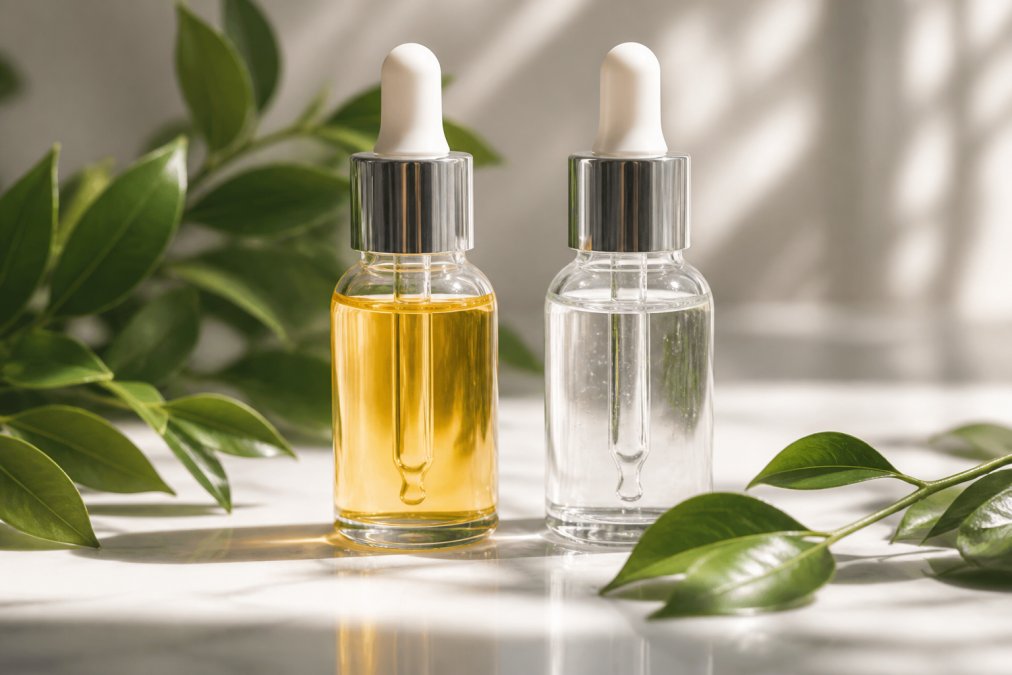
Quick Comparison: Face Oil vs Serum at a Glance
| Factor | Face Oil | Serum |
|---|---|---|
| Base | Lipid-rich plant oils | Water or gel-based |
| Main Role | Seal in moisture, nourish barrier | Deliver active ingredients deep |
| Best For | Dry, mature, or compromised skin | Dehydrated, dull, or blemish-prone skin |
| Texture | Rich, velvety, absorbs slowly | Light, fluid, absorbs quickly |
| When to Apply | Last step, after serum | Before oil or moisturiser |
| Example | Radiance Face Oil, £26.00 | Superfood Face Firming Serum, £37.00 |
Face oil vs serum isn't a competition where one wins outright. They are complementary steps in a layering routine, each addressing a different type of dryness. Serums target dehydration, a lack of water. Oils target dryness, a lack of lipids.

When a Natural Face Oil Delivers the Hydration You Need
A natural face oil is the right choice when your skin feels tight, looks flaky, or has a weakened barrier that stings when you apply products. Oils rich in linoleic acid and vitamins mimic your skin's own sebum, helping to repair the barrier and prevent transepidermal water loss.
For mature skin, oils offer more than surface comfort. The Radiance Face Oil from Silvan Skincare blends organic camellia, rosehip, and frankincense to smooth laughter lines and replenish tired complexions. It won the Bronze award in the Facial Oil category at the Green Parent Natural Beauty Awards 2022. Rosehip oil provides a natural source of vitamin A, which supports skin renewal without the irritation some find with synthetic retinoids (peer-reviewed research).
When a Serum Gives Skin the Deep Drink It Wants
A serum is the answer when your skin looks dull, feels tight after cleansing, or shows fine dehydration lines that vanish when you pinch the skin. Water-based serums carry smaller molecules that penetrate deeper than oils ever can, delivering humectants that draw moisture into the skin.
The Superfood Face Firming Serum at £37.00 is a prime example. It blends bio-active plant oils with botanical extracts including pomegranate for antioxidants, chia to reduce fine lines, and spilanthes acmella, a plant extract that relaxes facial muscles for an instant firming effect. It feeds areas of dry skin and creates a natural glow without greasiness, making it a suitable daily moisturiser replacement for most skin types.
Best Natural Ingredients for Skin Hydration in Both Formulas
Knowing which ingredients to look for makes the face oil vs serum decision far simpler. For best natural ingredients for skin hydration, scan the label rather than the product type.
In serums, seek out:
- Hyaluronic acid - holds many times its weight in water to plump the skin
- Aloe vera - soothes and calms while providing light hydration
- Vitamin C - brightens and supports collagen production
- Sea buckthorn - rich in essential fatty acids and antioxidants
In face oils, prioritise:
- Camellia oil - penetrates quickly and deeply for hydration without a greasy trace
- Rosehip oil - a natural source of vitamin A for renewal
- Argan oil - high in vitamin E to soften skin and reduce fine lines
- Wheatgerm oil - vitamin E rich, ideal for overnight revival
For a brightening boost, the Mandarin Orange Correcting Facial Serum at £26.90 combines vitamin C, aloe vera, and sea buckthorn with hyaluronic acid to even tone and deeply hydrate in one step.
How to Layer Natural Skincare Products for Maximum Hydration
Getting the order right transforms how well your products perform. How to layer natural skincare products comes down to one rule: apply thinnest to thickest, and always put water-based products before oil-based ones.
- Cleanse your skin gently to remove impurities without stripping natural oils.
- Apply serum to damp skin while it can still draw in moisture.
- Wait 60 seconds for the serum to absorb fully.
- Seal with face oil pressing it into the skin rather than rubbing.
- Finish with moisturiser or SPF in the morning if your skin needs extra protection.
Choosing Based on Your Skin Type and Hydration Needs
Your skin type should guide whether you reach for a face oil, a serum, or both. There is no universal answer, but there are reliable patterns.
For dry, mature, or sensitive skin, a nourishing face oil is essential. The Comforting Face & Body Oil at £28.00, a Gold winner at the Health & Wellbeing Awards 2024, absorbs quickly without a greasy feel. Its cold-pressed argan, avocado, and cherry kernel oils soften the skin and improve elasticity while calming inflammation.

For dehydrated, dull, or combination skin, a serum delivers the water your skin craves. The Superfood Face Firming Serum suits all skin types and feeds dry areas while regulating oil production thanks to hemp seed oil.
For blemish-prone skin, lightweight, non-comedogenic oils and balancing serums work best. Avoid heavy butters and seek oils high in linoleic acid, which help regulate sebum (PubMed).
| Skin Type | Primary Need | Start With | Follow With |
|---|---|---|---|
| Dry and flaky | Lipids and barrier repair | Hydrating serum | Rich face oil |
| Dehydrated but oily | Water without heaviness | Lightweight serum | Optional, non-comedogenic oil |
| Mature and tired | Renewal and plumping | Firming serum | Rosehip or camellia oil |
| Sensitive and reactive | Calming and protection | Soothing serum | Minimal, fragrance-free oil |
Conclusion: Building Your Hydration Routine
The natural face oil vs serum for hydration question rarely needs an either-or answer. Most skin benefits from both: a serum to deliver water and active ingredients, then an oil to lock everything in and strengthen the barrier overnight. Start with your primary concern, whether that is dullness, flaking, or fine lines, and build your routine from there.
At Luxe Beauty Hub, we curate award-winning natural skincare that combines deep hydration with gentle, effective ingredients. Explore our range of face oils and serums to find the combination that leaves your skin feeling supple, radiant, and genuinely comfortable.
Frequently Asked Questions
Should I apply face oil or serum first?
Apply serum first, then face oil. Serums are water-based and deliver active ingredients deep into the skin. Face oils are occlusive and create a seal to lock in that hydration. Wait a minute or two for the serum to absorb before pressing a few drops of oil over the top. This order helps both products work effectively.
Can I use a natural face oil instead of a moisturiser?
Yes, many natural face oils can replace a moisturiser, especially for normal to dry skin types. Oils like camellia and rosehip provide essential fatty acids that nourish the skin barrier. If your skin is very dry, you might prefer a richer oil or layer a serum underneath for an extra hydration boost.
Do natural face oils provide better hydration than water-based serums?
They work differently. Serums deliver water-based humectants that draw moisture into the skin, offering immediate plumping hydration. Face oils are emollients and occlusives that soften skin and prevent water loss. For deep, lasting hydration, many people find combining both works best.
Are face oils suitable for blemish-prone skin?
Yes, when you choose the right ones. Look for non-comedogenic oils such as jojoba, hemp, or baobab which help regulate oil production. Avoid heavy, pore-clogging oils. The Superfood Face Firming Serum includes hemp and black cumin, both anti-inflammatory ingredients that can help balance blemish-prone skin.
Getting the balance right between hydration and nourishment transforms how your skin looks and feels. Luxe Beauty Hub offers a carefully selected range of pure skincare essentials, from the award-winning Radiance Face Oil to the firming Superfood Serum, each crafted with high-quality natural ingredients. Shop our collection and build a routine your skin will thank you for.


