


Table of Contents
- What You'll Need Before You Start
- Step 1: Cleanse Gently to Protect Your Skin Barrier
- Step 2: Layer Hydration to Tackle Dryness
- Step 3: How to Hydrate Dry Skin Over 50 with the Right Moisturiser
- Step 4: Choose the Best Natural Anti-Ageing Ingredients for Mature Skin
- Step 5: Adapt Your Menopause Skincare Routine as Hormones Shift
- Step 6: Protect with SPF Every Morning
- Common Mistakes to Avoid When Building a Natural Skincare Routine
- Frequently Asked Questions
Last Updated: September 14, 2026
What You'll Need Before You Start
Building a natural skincare routine for over 50s starts with understanding one thing: your skin has changed, and the products that worked at 35 will not deliver the same results now. This guide walks through six steps, from gentle cleansing to daily SPF, that form a complete natural skincare routine for mature skin.
Before you buy anything, take stock of what you have and what your skin actually needs.
- A gentle, sulphate-free cleanser
- A hydrating serum with ceramides or hyaluronic acid
- A richer moisturiser formulated for mature skin
- A broad-spectrum SPF30 or higher
- One targeted treatment, such as a natural retinol alternative
Most routines fail because people add too many products at once. Start with the basics and build from there.
Step 1: Cleanse Gently to Protect Your Skin Barrier
Harsh foaming cleansers strip the lipids that keep mature skin comfortable, which is why gentle cleansing matters more now than it did a decade ago. Look for cream or oil-based formulas that remove make-up and grime without leaving your face tight.
A common mistake is cleansing twice with a strong product to feel "really clean." That squeaky feeling is a sign your barrier is under strain, not a sign of effectiveness. Cleanse once in the morning with lukewarm water and a soft cloth, and repeat at night to remove the day's build-up.
If your skin feels dry within minutes of washing, your cleanser is too aggressive. Switch to something creamier before adjusting anything else in your routine.
Step 2: Layer Hydration to Tackle Dryness
Hydration for mature skin works best in layers, not a single heavy product. Applying a lightweight hydrating serum while your skin is still slightly damp helps lock in moisture before your moisturiser seals it.
The NHS guidance on healthy skin notes that skin becomes thinner and drier with age, which is why hydration needs to be a daily habit rather than an occasional treatment.
- Apply serum to damp skin, not dry skin
- Pat, don't rub, to avoid tugging
- Wait 30 seconds before the next layer
- Follow with moisturiser to seal everything in
This layering approach is the backbone of any effective natural skincare routine, and it takes less than two minutes.
Step 3: How to Hydrate Dry Skin Over 50 with the Right Moisturiser
Choosing the right moisturiser is the single biggest lever for how to hydrate dry skin over 50. You want a formula rich enough to comfort tightness but light enough to absorb without sitting on the surface.
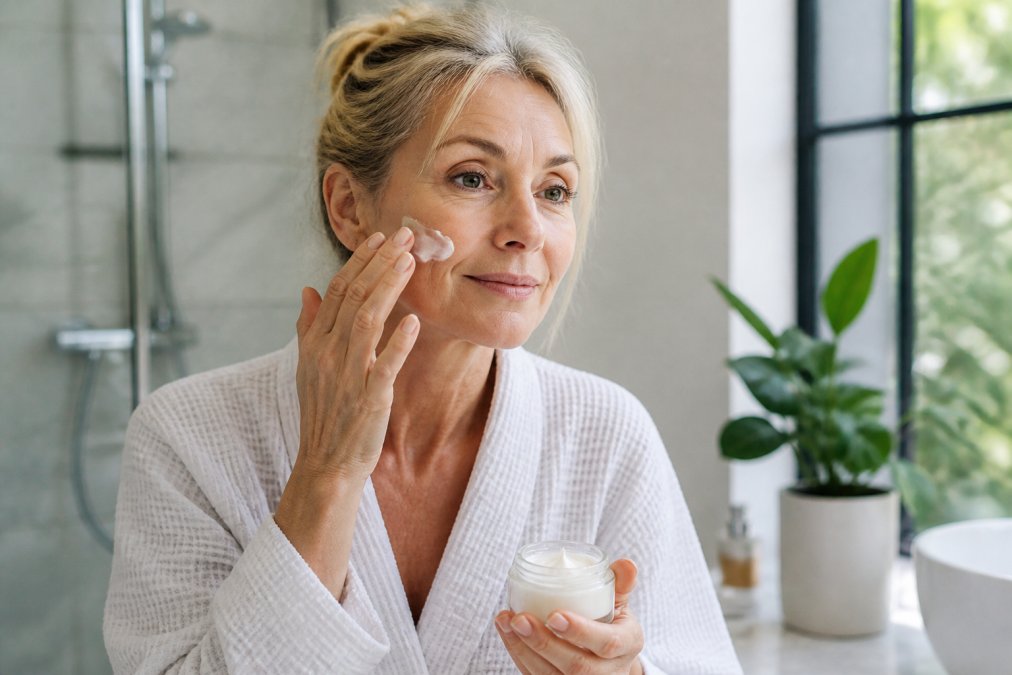
Look for ceramides, squalane, or plant oils near the top of the ingredient list. These ingredients support the skin barrier rather than just coating it.
The Ultimate Day & Night Moisture Set combines an Imperial Moisturiser for daytime with a Night Elixir for overnight repair, giving mature skin lasting hydration.

Step 4: Choose the Best Natural Anti-Ageing Ingredients for Mature Skin
The best natural anti-ageing ingredients for mature skin are the ones your barrier tolerates consistently, not the strongest option on the shelf. Retinol alternatives, vitamin C, and ceramides are often recommended because they work gradually without the irritation that stops people from sticking with a routine.
| Ingredient | What It Does | Best For |
|---|---|---|
| Ceramides | Rebuild the skin barrier | Dry, tight skin |
| Vitamin C | Supports radiance and tone | Dull, uneven skin |
| Bakuchiol | Gentle retinol alternative | Sensitive mature skin |
| Squalane | Lightweight moisture | All mature skin types |
The MOISTUREBURST Hydrating Glow Ceramide Serum delivers ceramides in a vegan, cruelty-free formula designed for mature skin, which makes it an easy starting point if you are new to targeted treatments.

Step 5: Adapt Your Menopause Skincare Routine as Hormones Shift
- Increase moisturiser richness rather than adding new actives
- Reduce exfoliation to once a week or less
- Introduce a gentle retinol alternative at night
- Keep cleansing minimal and hydrating
The Ammuri 3.5% Retinol Face Serum is designed for gradual renewal, with evening-only use and a beginner schedule of two to three nights per week. That pacing suits skin that has become more sensitive during the transition.

Step 6: Protect with SPF Every Morning
Use a broad-spectrum SPF30 or higher every morning, even in winter and even on cloudy days (the NHS). The GLOWGUARD SPF30 Anti-Ageing Moisturiser combines sun protection with hydration, so you are not adding an extra step to an already full routine.
Common Mistakes to Avoid When Building a Natural Skincare Routine
- Introducing several new products in the same week, making it impossible to identify what caused a reaction
- Using hot water, which strips oils faster than lukewarm water
- Skipping patch tests on new actives
- Expecting overnight results from gradual ingredients like bakuchiol or ceramides
- Ignoring the neck and décolletage, where ageing shows early
Give any new product at least three weeks before judging it (the NHS). Consistency matters more than intensity.
Frequently Asked Questions
What are the best natural ingredients for mature skin?
Ceramides, plant oils such as jojoba and rosehip, and gentle humectants like glycerine are among the most effective natural ingredients for mature skin. Ceramides help rebuild the skin barrier, which weakens with age, while plant oils replenish lipids without clogging pores. Look for formulas that combine these with antioxidants like vitamin E. A ceramide-rich serum used morning and night can visibly plump and hydrate dry, tired skin within weeks.
How does menopause affect skin and how should my routine change?
During menopause, falling oestrogen levels reduce collagen production and sebum, leading to dryness, thinning and increased sensitivity. Your menopause skincare routine should focus on gentle cleansing, richer moisturisers and barrier-repairing ingredients like ceramides. Introduce active ingredients such as retinol slowly, starting twice a week, and always follow with a nourishing moisturiser. Avoid harsh scrubs and alcohol-based toners, which can aggravate already compromised skin.
Can natural skincare products effectively reduce the appearance of wrinkles?
Natural skincare can soften the look of fine lines by keeping skin well hydrated and supporting its barrier. Ingredients like ceramides and plant oils improve elasticity and smoothness, while antioxidants help defend against environmental damage. Natural alternatives such as bakuchiol offer a gentler option. Consistency matters more than intensity: a daily routine followed for eight to twelve weeks will show visible improvement.
What is the most important step in a skincare routine for over 50s?
Daily sun protection is the single most important step. UV exposure causes the majority of visible ageing, including wrinkles and pigmentation. An SPF30 moisturiser worn every morning, even in winter, protects against further damage and allows repair ingredients to work. Pair it with a gentle cleanser and a hydrating serum for a routine that defends and restores. Skipping SPF undoes much of the benefit of everything else you apply.
Building a natural skincare routine for over 50s is less about finding miracle ingredients and more about consistency, gentleness, and products that respect your changing skin. At Luxe Beauty Hub, we curate award-winning natural formulas designed for deep hydration, natural anti-ageing, and gentle daily care, so you can build a routine that actually fits your skin. Explore our curated skincare collection and find the products that suit your skin type and stage. Let's shop.


